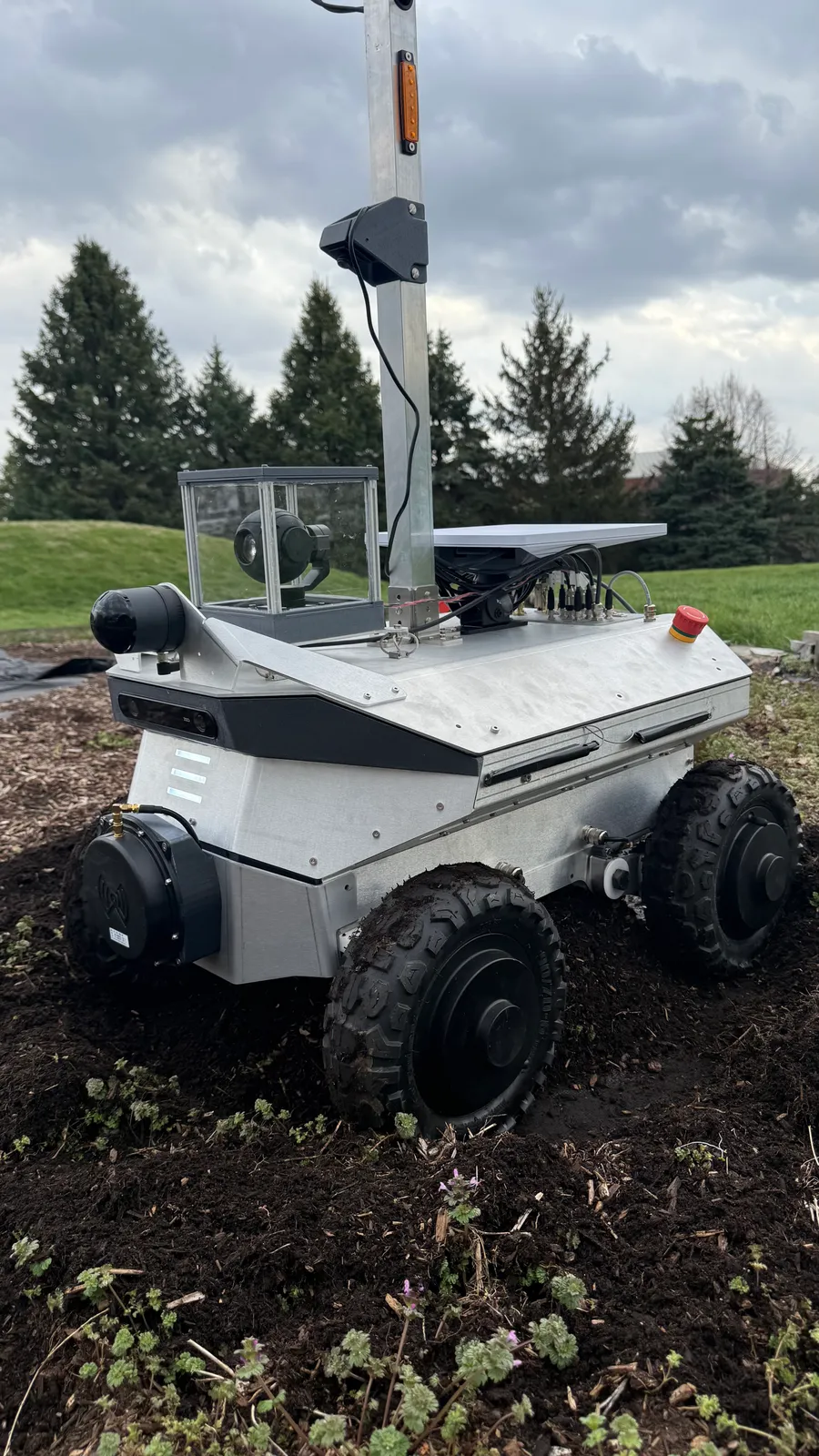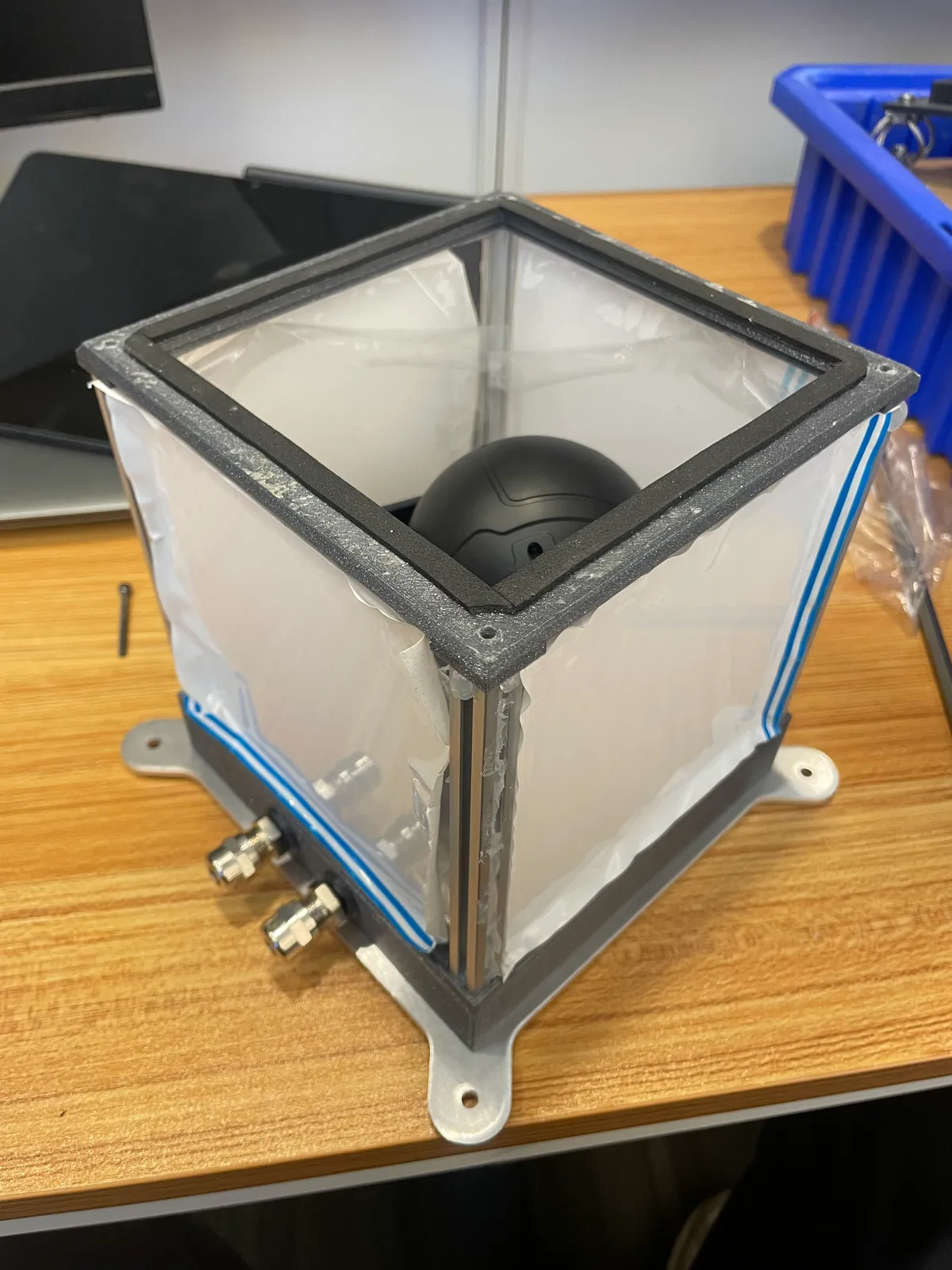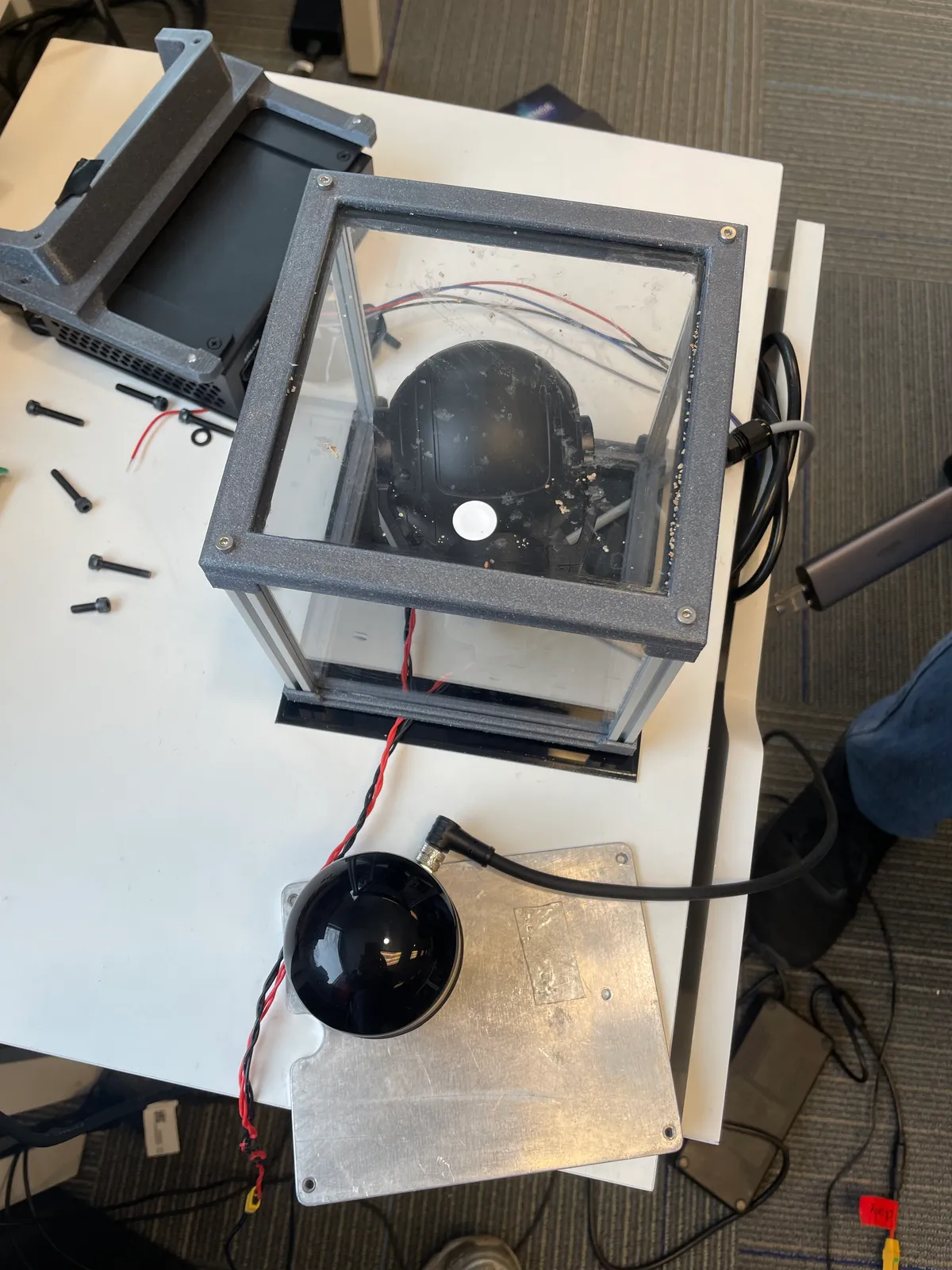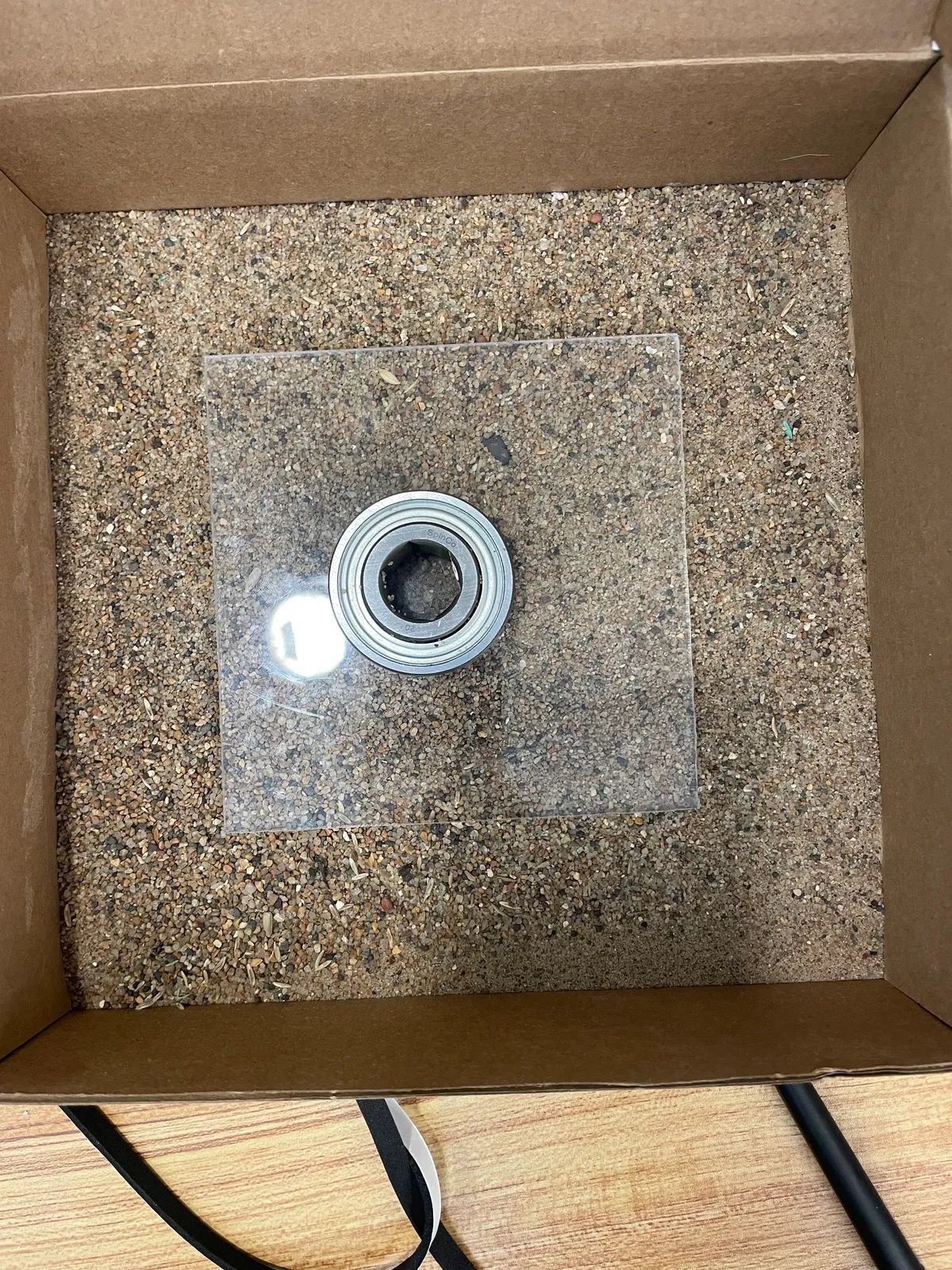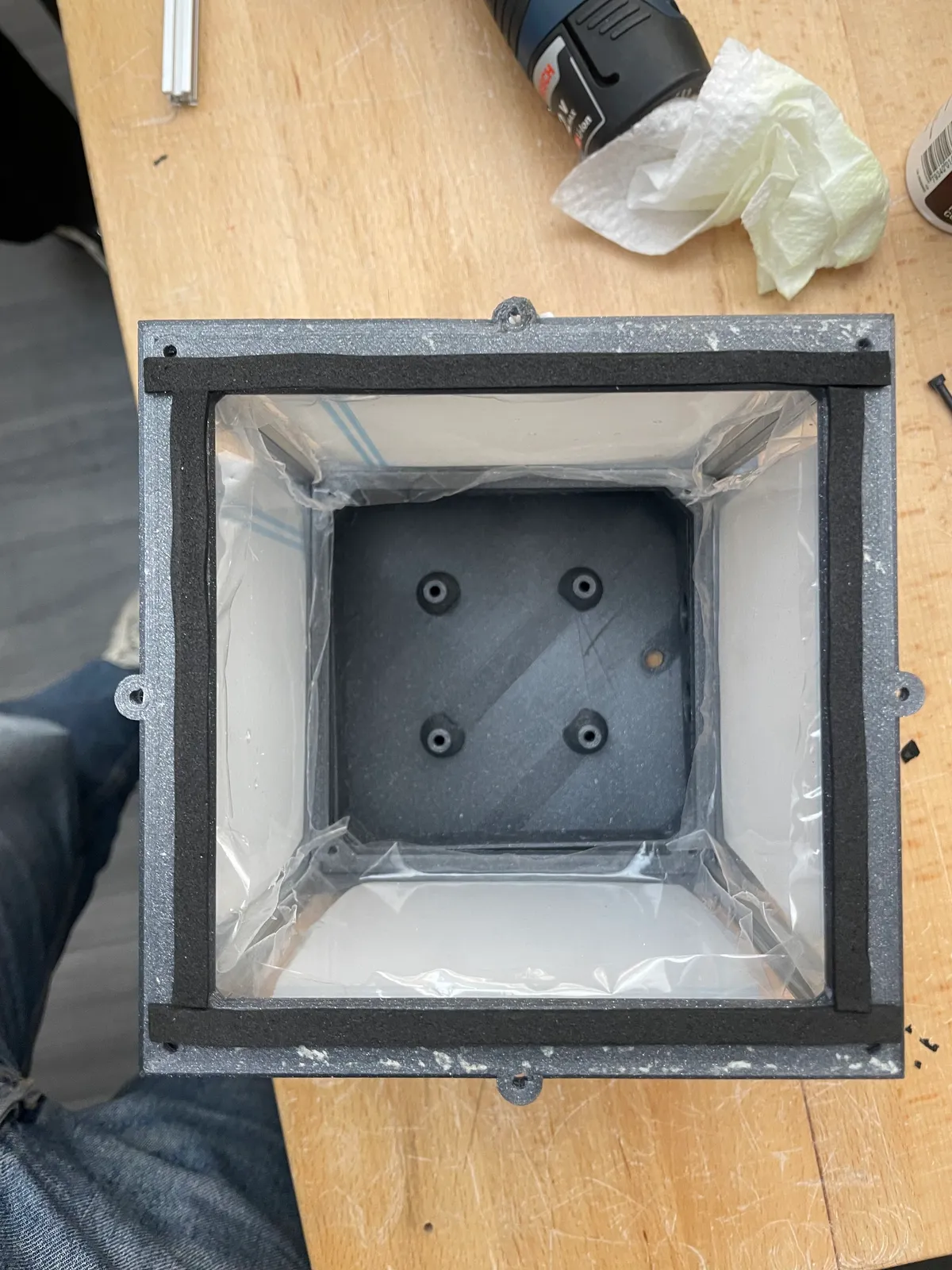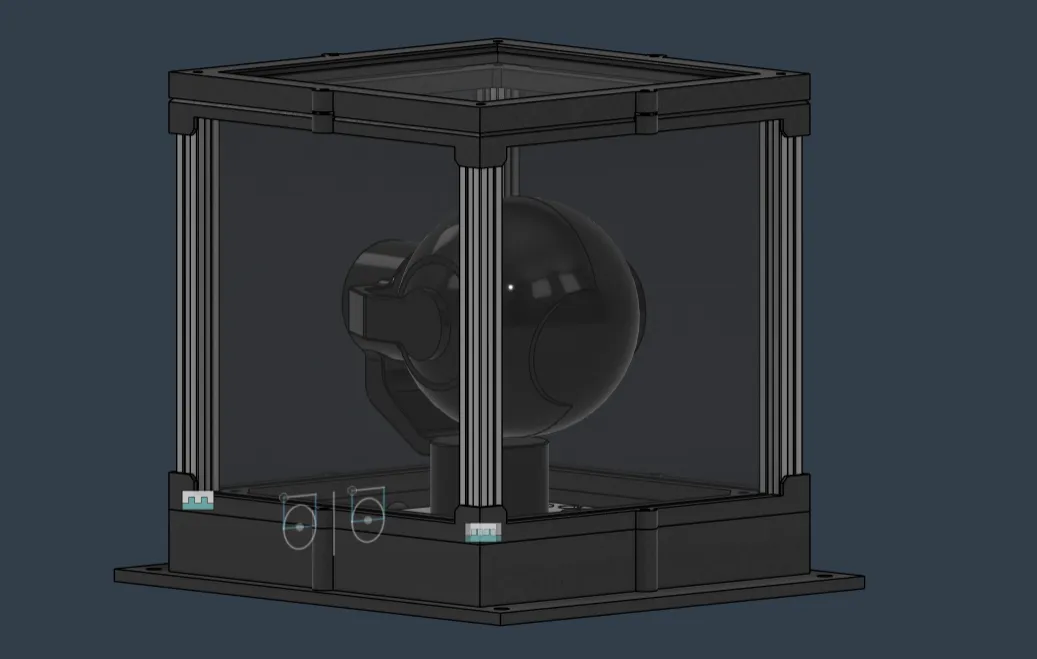
A weatherproof PTZ camera enclosure designed for a ground rover operating in Mojave Desert, built to read barcodes on the underside of solar panels at 2–4 meter distances. The enclosure houses a UAV-grade Pan-Tilt-Zoom camera and needed to survive extreme dust, heat, vibration, and outdoor UV exposure.
Because near-perfect optics across varied climates was the primary goal, I benchmarked optical clarity across candidate enclosure geometries before committing to any real CAD work.
The initial concept used spherical acrylic domes, but real-world testing across three dome geometries revealed unacceptable optical aberrations from manufacturing inconsistencies inherent to the domes. Higher-grade domes solved the clarity problem, but at a cost that couldn't be justified.
The design pivoted to a cuboidal flat-panel assembly using high-grade acrylic (92% transparency, UV-stabilized, 3-year outdoor rating) — validated through barcode readability tests successful at 4 meters and confirmed edge/reflection analysis in direct sunlight.
With the flat panels validated, detailed CAD work began on joining the panels in a way that balanced weatherproofing, assembly time, cost, and field access for maintenance.
Led this project in an engineer + PM capacity — end to end design, leading the testing protocol, selecting components, documenting the design pivot decision, and driving the verification roadmap covering waterproofing, dust ingress, condensation, and vibration dampening for the PTZ camera.